Reclaimed Brick Terrace
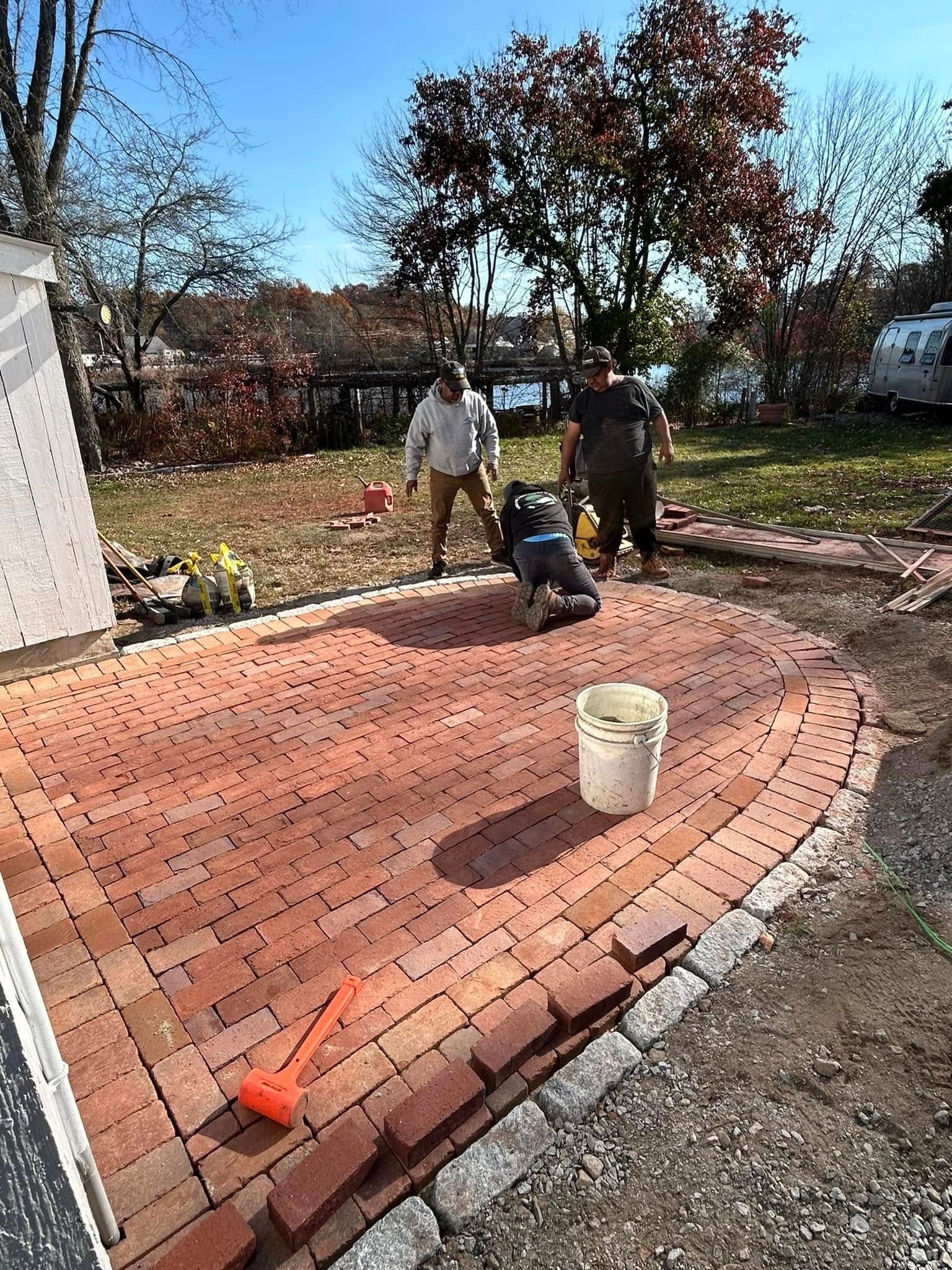
Radial brick terrace, cobble edge
Build photos included

Hardscape
Terraces built on a base that survives a New England freeze — full-depth processed gravel, proper pitch, edge restraint that stays put.
A terrace fails from the bottom up. What you see in year five is set by what went underneath it in week one: how deep the excavation went, how the base was compacted, how the surface was pitched, and whether the edge was restrained properly.
We excavate to full depth, compact processed gravel in lifts, and set pitch away from the house before a single unit is laid. Because we run our own excavator, that part of the job is not a subcontractor’s schedule problem — it happens when we say it happens.
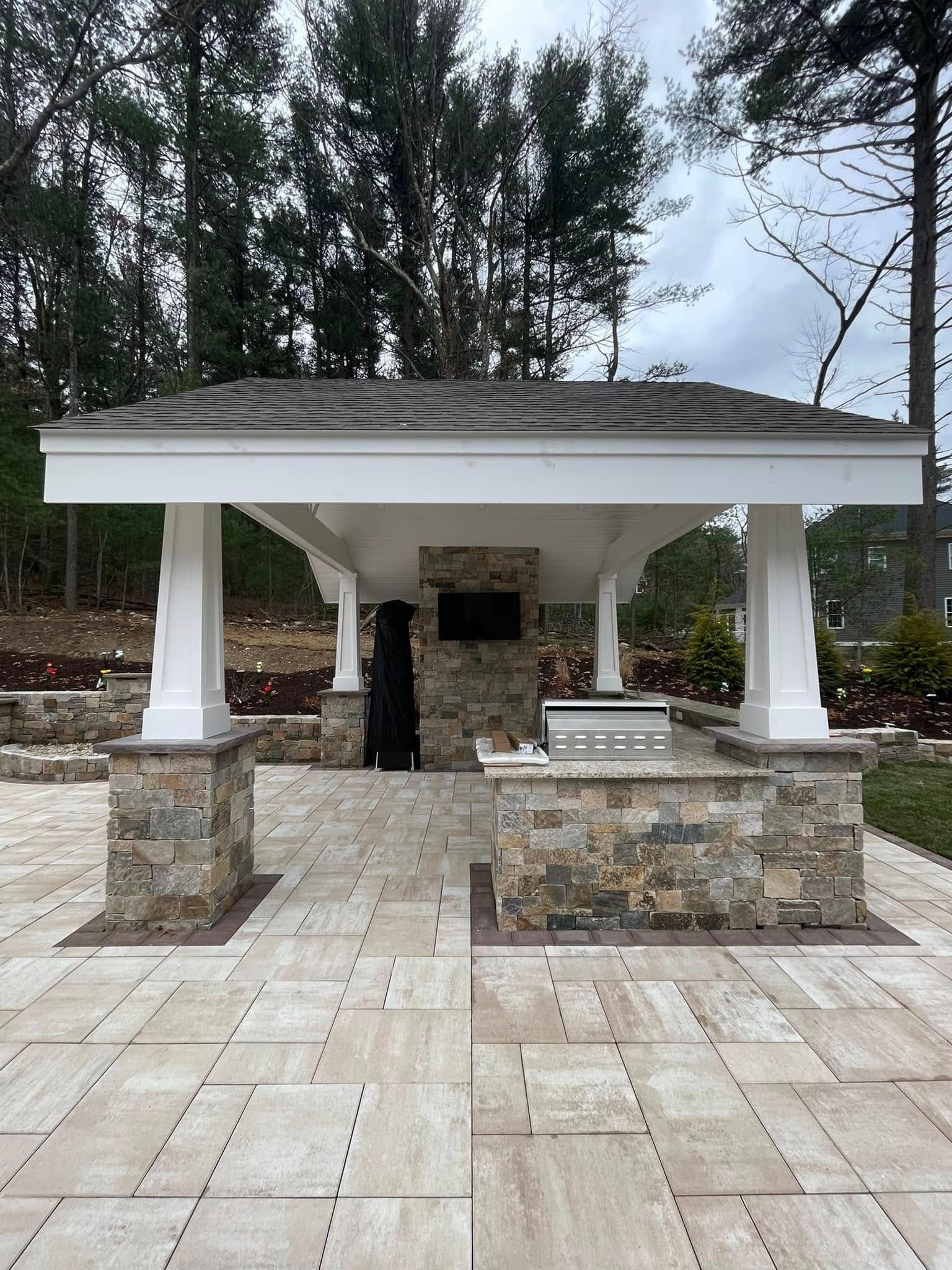
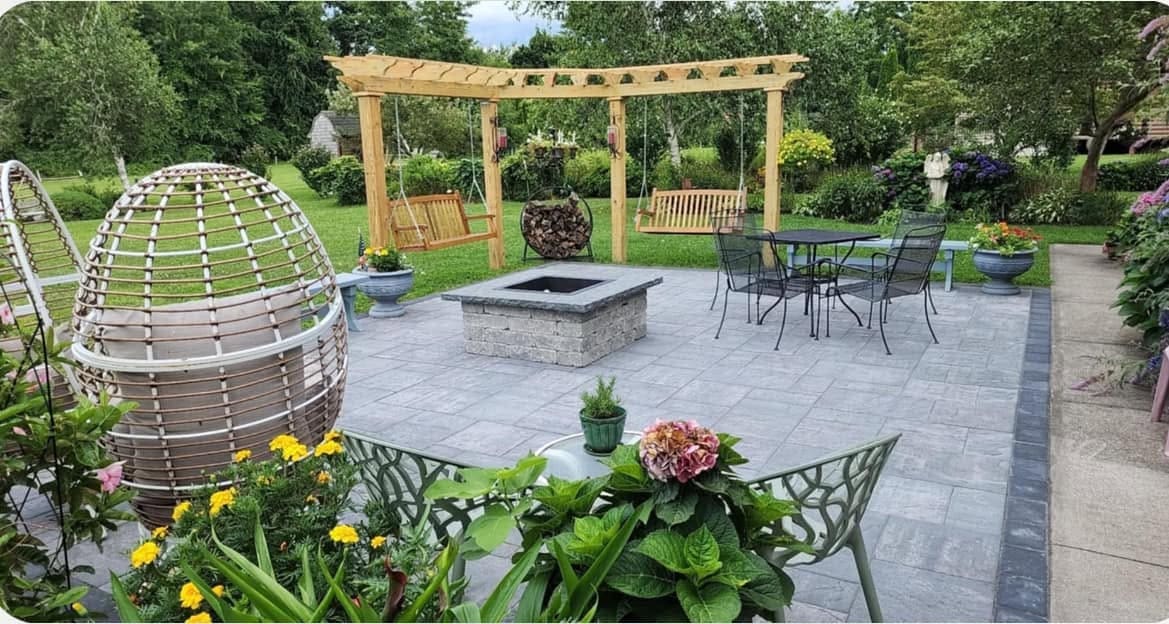
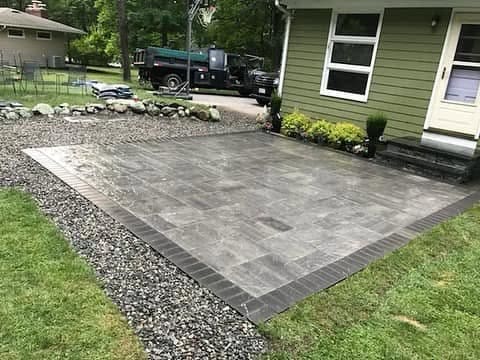
Above the base, the material follows the house. Reclaimed brick laid radially reads differently from large-format porcelain, and both read differently from a thermal bluestone terrace with a cut border. We name the material and the pattern in the plan so there is no ambiguity when it arrives on a pallet.
What it typically costs
Cost is driven by square footage, how much excavation and disposal the grade demands, the material itself, and how much cutting the shape requires. Curves and radial patterns cost more than rectangles.
We would rather give you a real figure for your property than a range wide enough to be meaningless. That is what the consultation is for — an hour on the ground gets you a number you can actually plan against.
Built by us
Common questions
We’ll walk the property, talk through how you actually want to use it, and give you a clear read on scope and budget before anything is drawn or dug.