Covered Outdoor Kitchen & Stone Fireplace
Outdoor kitchen, fireplace, porcelain terrace

Living
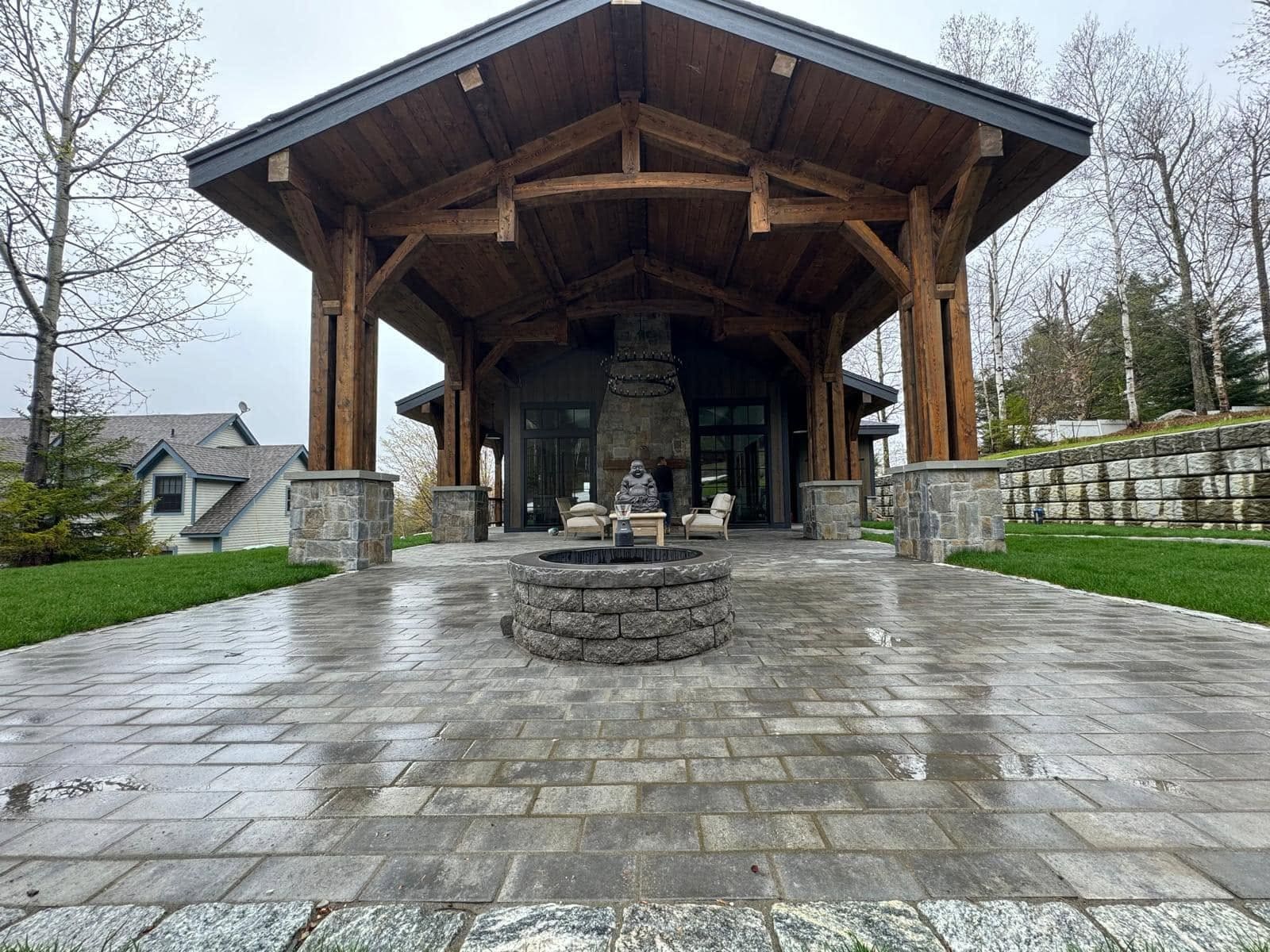
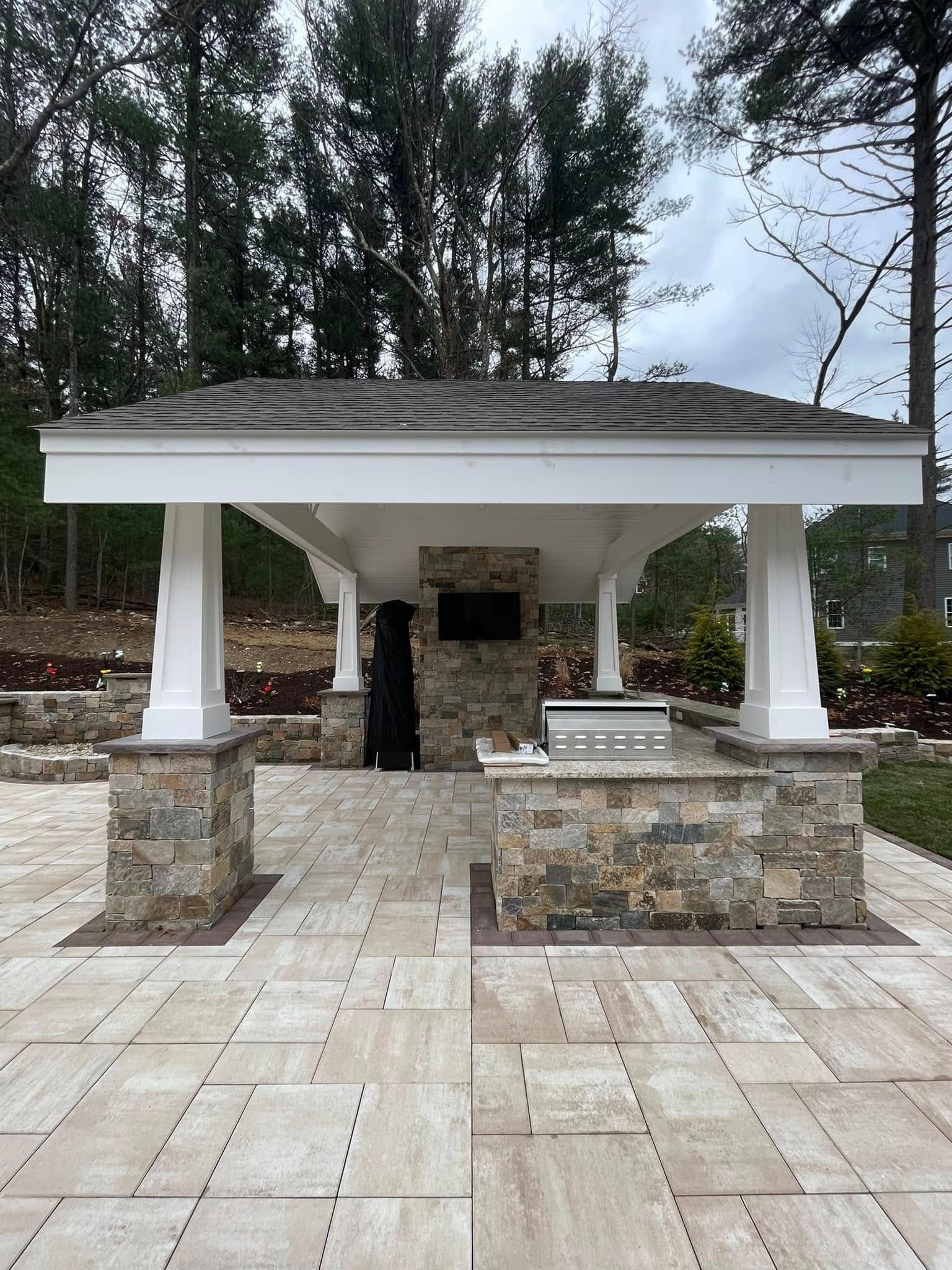
Built structures, not furniture — masonry bars, stone fireplaces with real fireboxes and flues, and fire pits set into the terrace they belong to.
The difference between an outdoor kitchen and a grill on a patio is that one is built into the property and one is parked on it. A masonry bar has footings, a veneer that matches the house, a stone or granite counter cut to the run, and utilities routed before the terrace closes over them.
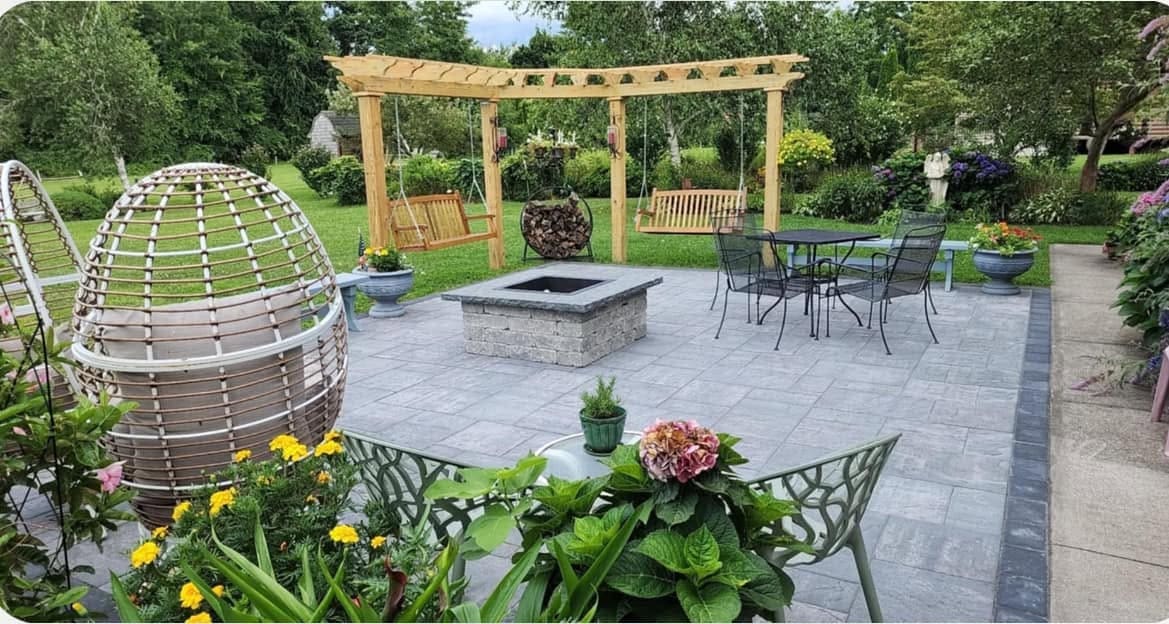
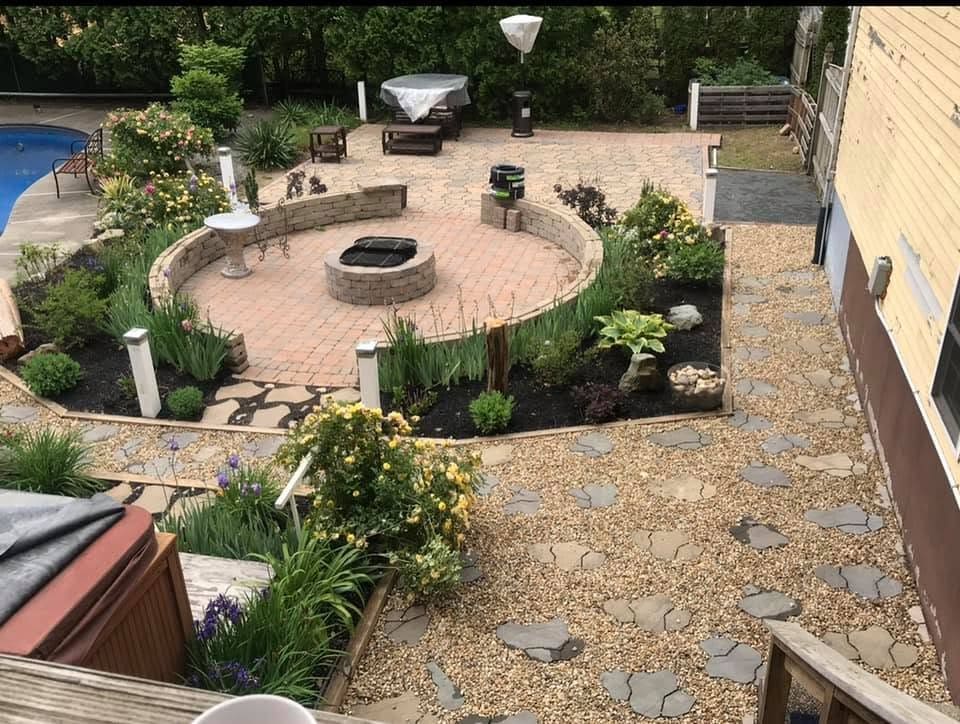
Fire features are the same idea. A stone fireplace needs a firebox, a throat and a flue that actually draws, plus wood storage that is part of the structure rather than a rack leaning against it. A fire pit needs to sit at the right height for the seating around it and at the right distance from everything that is not meant to catch.
All of it gets located in the plan first, because the utility runs, the terrace pitch and the seating geometry have to agree with each other. Retrofitting a gas line under a finished terrace is the kind of expensive that is entirely avoidable.
What it typically costs
A fire pit set into an existing terrace and a full covered kitchen with a masonry fireplace are different orders of magnitude. Appliances, veneer selection and whether a roof structure is involved drive most of the spread.
We would rather give you a real figure for your property than a range wide enough to be meaningless. That is what the consultation is for — an hour on the ground gets you a number you can actually plan against.
Built by us
Common questions
We’ll walk the property, talk through how you actually want to use it, and give you a clear read on scope and budget before anything is drawn or dug.